The Line Item That Never Ends
The Number in the Quote Is Not the Number
Every IoT business case I have been shown starts from a hardware quotation, because that is the figure a supplier will give you for free. It is also the smallest number in the model, and reasoning from it produces a budget that runs out somewhere in year two for reasons nobody wrote down.
What follows is the full five-year picture with the arithmetic exposed, so you can substitute your own device counts. The figures are in euros and the shape holds in any currency; what changes by region is labour, and that is the line most sensitive to where you are.
The reason five years is the right window rather than three is that two of the largest costs, battery replacement and the compounding subscription, only become visible in year three or four. A three-year model systematically flatters exactly the choices that hurt most later.
Hardware Is the Easy Third
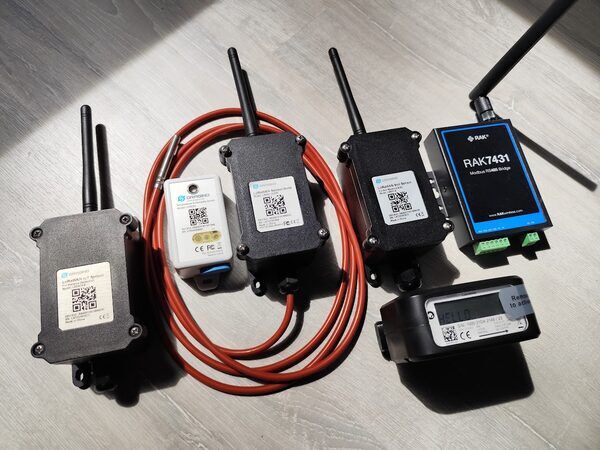
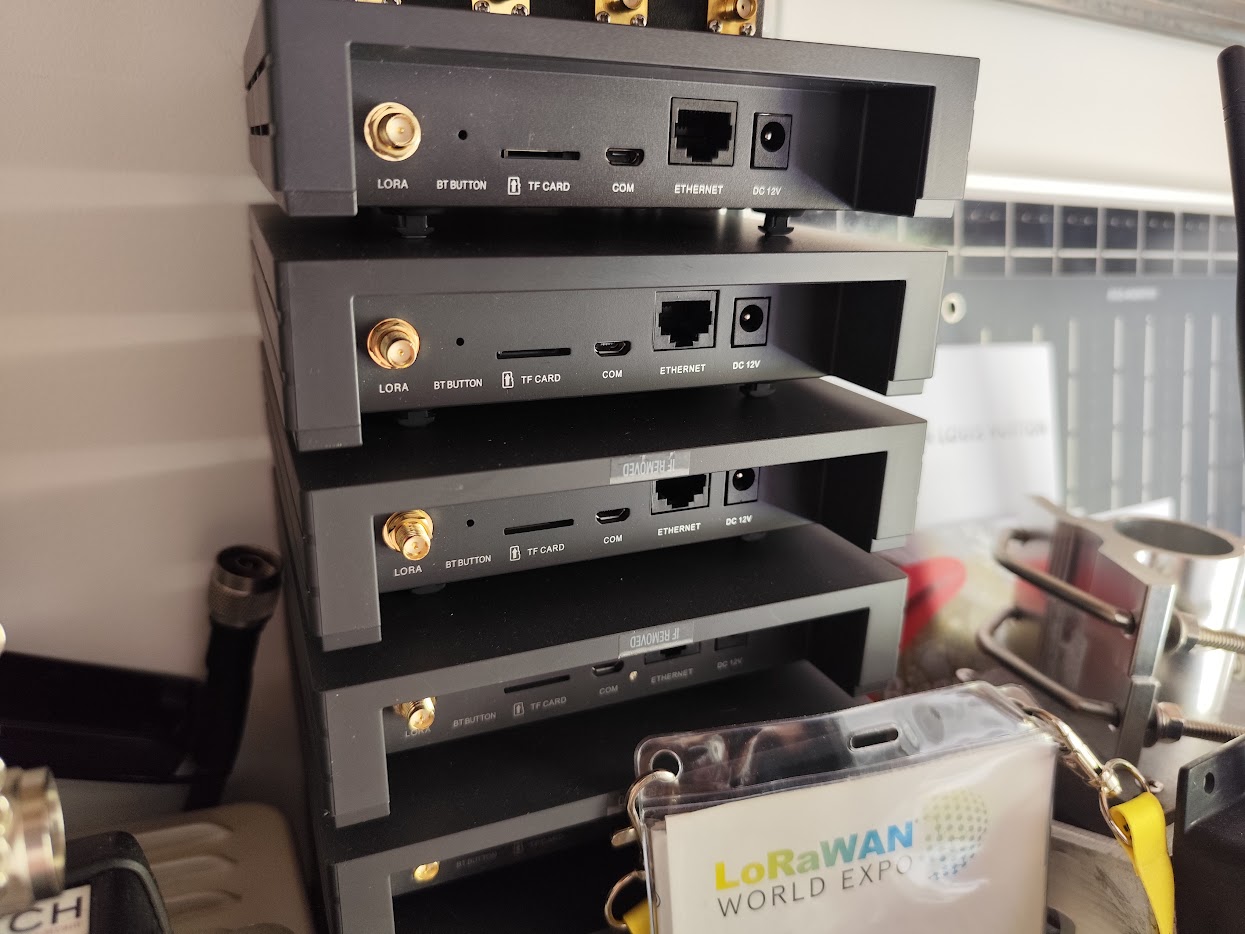
Devices run 20 to 100 EUR for common measurements, more for anything with a positioning receiver or a certified metering element in it, less at volume. Field infrastructure, whether that is a gateway, an edge router or a cellular bridge, is 300 to 600 EUR for an outdoor unit and half that indoors.
How many of those you need is the question that actually decides the budget, and it is a coverage question rather than a catalogue question. The same gateway honestly covers three to five kilometres in open terrain and four hundred metres in a dense urban core with the devices in basements, which is a difference of two orders of magnitude in the number you buy. A survey before you commit to positions costs a day or two and routinely changes the infrastructure line by a factor of three.
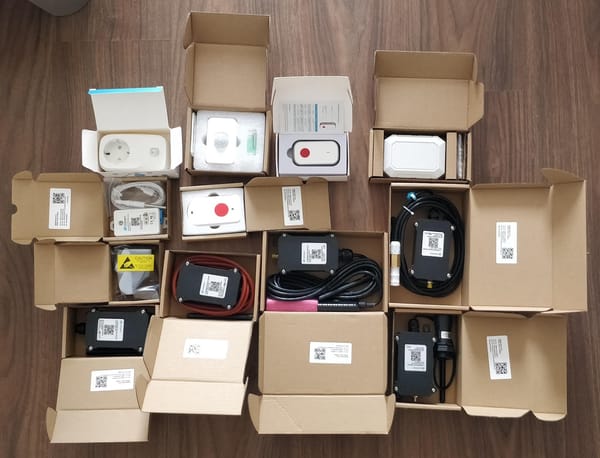
Then add the parts nobody quotes. Mounting hardware, brackets and enclosures for the units that do not fit anything standard. Surge protection for anything on a mast or a roof. Spares, which should be five to ten percent of the fleet and sitting in a cupboard rather than ordered when needed, because a device out of stock is a second site visit.
Installation Usually Costs More Than the Devices
This is the line that gets estimated from the easy site and paid on the hard one.
A straightforward indoor sensor is fifteen to thirty minutes once someone is standing in front of the right wall. Everything before that is the cost: travel between sites, waiting for an escort, discovering that the plant room key is held by a tenant, and returning because the position measured badly. In an occupied commercial building I plan on four to six devices installed per person-day, not the ten or twelve the physical work would suggest.
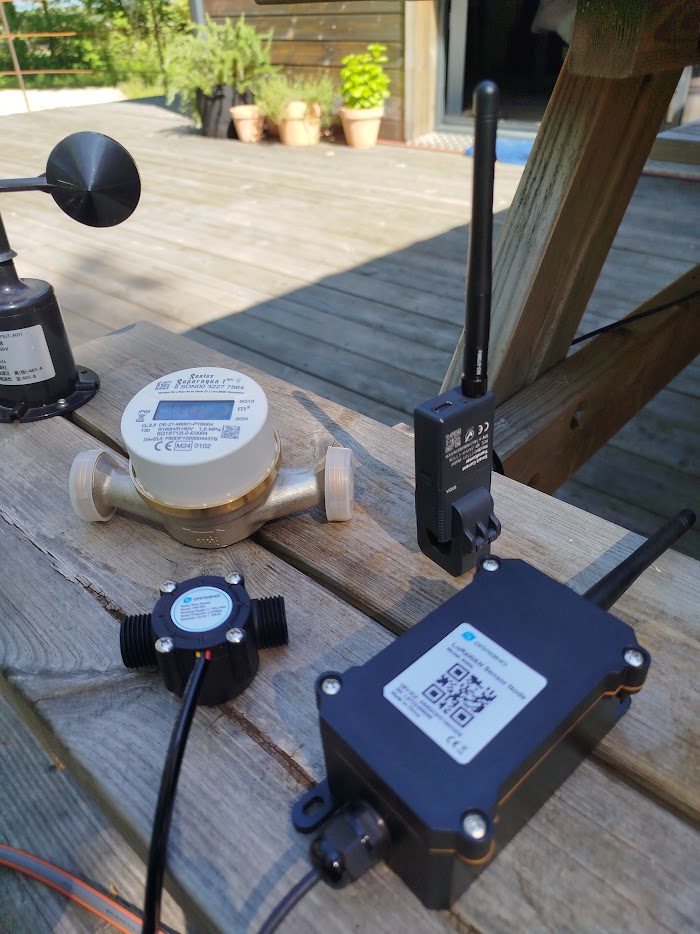
Anything electrical changes the calculation again. A clamp-on current sensor in a live board is quick and still requires a qualified electrician in most jurisdictions. A meter in the pipe means isolating the supply, which means booking a window, which means the site's schedule rather than yours.
At a realistic 40 to 70 EUR per hour for a qualified installer and two people for anything at height, a three-hundred-device rollout across a portfolio lands somewhere between 25,000 and 60,000 EUR in labour alone. Against 300 devices at 60 EUR, which is 18,000, the installation is the larger number and it is almost always the one missing from the first business case.
Connectivity Is Where the Shapes Diverge
Here the two architectures stop resembling each other.
Infrastructure you own has essentially no per-device connectivity cost. The gateways need a backhaul, which indoors is usually an existing Ethernet drop at no marginal cost, and on a remote site is a cellular router at 50 to 150 EUR plus 5 to 20 EUR a month. Over five years that is 300 to 1,200 EUR per remote gateway, and there are far fewer gateways than devices.
Cellular per device inverts it. At 0.50 to 5 EUR per device per month, a fleet of 500 at 2 EUR costs 60,000 EUR over five years in connectivity alone. That is roughly three times the hardware and comfortably more than the installation, and unlike either of those it does not stop.
None of which makes cellular wrong. It is the correct answer whenever devices move or sit one to a location across a region, because no single site would justify a gateway and the carrier has already built the coverage. What it means is that devices-per-site is the variable to compute before choosing, not after. The connectivity article works through where that crossover falls.
The Platform Fee Is the One That Compounds
The largest divergence is not connectivity, it is the software layer, and it is the decision made fastest and revisited least.
A managed platform charges per device per month, typically 1 to 5 EUR, sometimes bundled into a connectivity price so it is harder to see. Self-hosting replaces that with a virtual machine: a small server handling a few thousand devices costs 20 to 60 EUR a month regardless of how many devices are on it, plus backups and a domain.
Over five years for 500 devices, the managed route at 2 EUR is 60,000 EUR. The self-hosted route is a server at 40 EUR a month, which is 2,400 EUR, plus the one-time cost of somebody setting it up properly. Even generously costed at 15,000 EUR of setup and a few days a year of maintenance, it is a third of the subscription and the gap widens every year the deployment survives.
A per-device fee is not a price, it is a partnership in your own growth. Every sensor you add for the next decade earns the platform revenue and earns you a line in the operating budget. On infrastructure you own, the two thousandth device costs the price of the device.
The trade is real and worth stating plainly. Self-hosting requires expertise to set up and someone to own it afterwards, and an organisation with no appetite for either should pay the subscription rather than pretend. What is not defensible is choosing the subscription without doing this arithmetic, which is how most such decisions get made.
Batteries and the Cost of Going Back
Devices reporting hourly on a well-chosen cell last five to ten years, which sounds like it removes this line from a five-year model. It does not, for three reasons.
Cold takes a third to a half of the usable capacity in freezers and unheated northern sites, so a nominal seven years becomes four. Devices at the edge of coverage transmit for far longer per message and drain faster than the fleet average, so the replacement schedule is not uniform. And a proportion of any fleet fails early for reasons that have nothing to do with chemistry.
Plan on replacing five to ten percent of the fleet's cells per year from year three, at a cost dominated entirely by the visit rather than the battery. The cell is a few euros. Getting a person in front of the device is thirty minutes and a booking, which is why a device with a replaceable cell in an accessible position is worth paying more for than one that is sealed and awkward.
A Worked Model
Three hundred devices across a portfolio of buildings, mixed metering and environmental sensing, five years.
| Self-hosted, owned network | Managed platform, cellular | |
|---|---|---|
| Devices, 300 units | 21,000 | 18,000 |
| Gateways and mounting | 6,000 | 0 |
| Installation labour | 35,000 | 35,000 |
| Setup and integration | 18,000 | 8,000 |
| Connectivity, 5 years | 3,000 | 36,000 |
| Platform fees, 5 years | 0 | 36,000 |
| Hosting, 5 years | 2,800 | 0 |
| Battery replacement | 6,000 | 6,000 |
| Five-year total | 91,800 | 139,000 |
The self-hosted column carries a higher setup cost and lower hardware count assumptions are deliberately unflattering to it. It still comes in around a third cheaper, and the gap is entirely in the two recurring lines. Extend the model to eight years and the difference roughly doubles, because one column has stopped growing and the other has not.
What the table does not show is the risk distribution. The self-hosted column concentrates risk in the setup, which is a known cost paid once. The managed column concentrates it in a supplier's pricing decisions, which is an unknown cost paid forever.
The Costs That Are Not on Anyone's Spreadsheet
Scope growth is the largest of them and the most predictable. The first building gets twenty sensors for one purpose, it works, and then four more purposes appear. Each addition is small and each multiplies across the portfolio, which is fine on owned infrastructure and expensive on a subscription. Budget twenty to thirty percent contingency and pick the architecture that makes growth cheap.
Integration is the second. Getting data into the systems people already use, the maintenance scheduler, the billing run, the reporting pack, is real engineering that shows up in no hardware quotation. It is also where most of the value is realised, so cutting it produces a deployment that measures things nobody acts on.
Third is the migration you will pay if the platform changes under you. A storage engine that goes through a major version break, a vendor acquired and repriced, an API deprecated. Choosing boring, portable components is not conservatism, it is refusing to pay that cost twice; the data layer article makes the case in detail.
And finally, decommissioning. Sensors come off walls, get disposed of under electronics regulations, and their credentials need revoking so a discarded unit cannot rejoin. It is a small number that is always zero in the model and never zero in reality.
Where This Model Breaks Down
Below about fifty devices, none of this arithmetic matters much. The recurring lines are small in absolute terms, the setup cost of owning infrastructure does not amortise, and paying a subscription to avoid the work is straightforwardly correct.
It also breaks for genuinely mobile fleets. Vehicles and containers crossing regions cannot be served by infrastructure you own at any sane price, and the subscription is not a lock-in, it is the product.
And if the deployment is a one-year proof with a decision at the end, optimise for speed rather than five-year cost. Buy the managed thing, learn what you need to learn, and do this arithmetic when you know what you are scaling to.
What I Provide
I build this model with your numbers in it, which mostly means finding the figures nobody has: hours per install measured on your least convenient site rather than estimated from the easiest, device counts that come out of a coverage survey rather than a floor plan, and the real terms of the platform contract including what happens at renewal.
Where the answer is that a subscription is right for you, that is what the report says, and it is the answer for smaller and more scattered deployments more often than you would guess from a consultant who builds self-hosted systems. Where it is not, I build the alternative and hand it over with the source code, so the arithmetic stays true after I have gone.
Does this describe your project?
If any of the above sounds like something you are dealing with, tell me about it. You will get a straight read on the right approach for your situation, and the first conversation costs nothing.
Start a conversationPrefer to see the finished thing first? There is one running on real devices