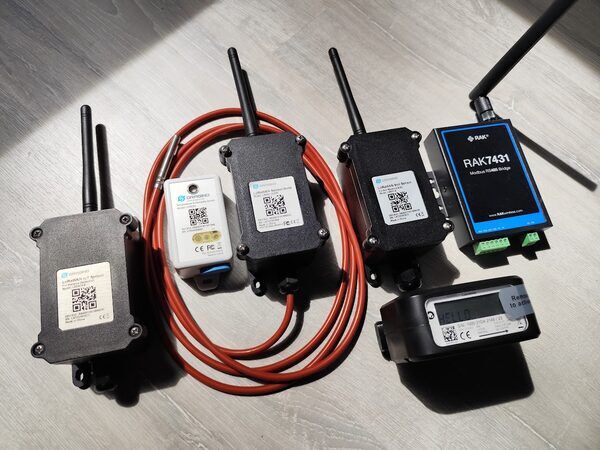
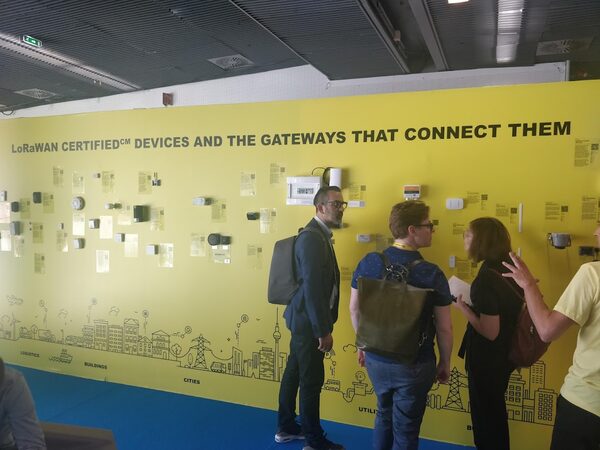
The Sensor That Works on the Bench and Dies in February
The Cost of Being Wrong Is Multiplied by Your Fleet
There are thousands of sensors on the market measuring the same handful of quantities, from hundreds of manufacturers, across a price range of five to one for what reads on paper as the same measurement. They all claim years of battery life. They all claim long range. They all publish a tidy table with green ticks in it.
A poor choice among them is completely invisible at proof of concept, because a proof of concept is one unit on a desk next to a gateway in a heated office. It becomes extremely visible eighteen months later, when a third of the fleet is silent and the fix is not a setting but a procurement cycle, an installation crew and a site access negotiation. The price of the wrong device is its unit cost multiplied by the fleet, plus the labour to take it back out.
This is the checklist I work through before a client commits, and it deliberately avoids naming brands, because the right device depends entirely on where it is going and how it will be operated.
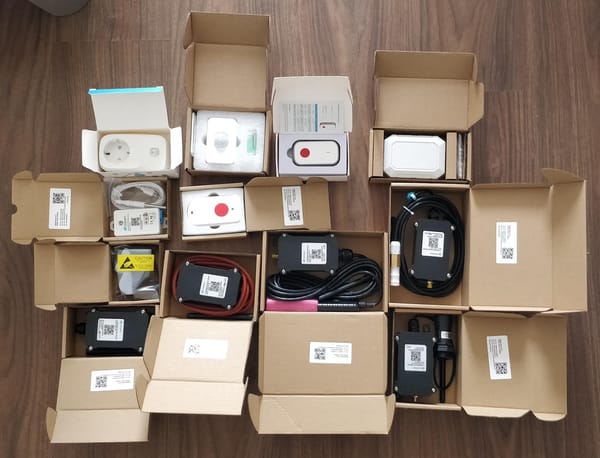
A datasheet describes a device in a laboratory. Deployment is about what it does on a basement wall, in February, three years from now, still running the firmware it shipped with. Those are different questions and only some of them are answered in the specification.
Start With the Region, Because It Is a Re-Purchase
A wireless device has to be built and certified for the country it will operate in, and this is the most expensive purchasing error I see because it cannot be fixed in software. A radio built for the European 868 MHz band is not going to work in a 915 MHz region: wrong frequencies, wrong regulations, wrong certification, no path back except buying again. Cellular has the same trap in a different shape, where a module has to support the specific bands the local carrier actually runs.
So two questions before anything else. Is there a variant certified for every country in the deployment, and can the vendor confirm which one ships from which warehouse? And does it carry the required approval, CE and RED in Europe, FCC in the United States, or the local equivalent, in a document you can put in front of an auditor? Uncertified hardware, or certified hardware on the wrong band, is a regulatory exposure rather than a performance risk, and the difference matters when somebody asks.
A deployment spanning several countries is really several procurement exercises wearing one purchase order. That is worth discovering before the first order rather than after the second.
How Fast Do You Need to Talk Back
Every low-power device trades battery life against how quickly you can reach it, and the vocabulary changes by technology while the physics does not.
A device that listens only just after it transmits is the cheapest to run and the slowest to command. It sleeps, wakes to send, opens a short receive window and goes back to sleep, which means a downlink waits until the next scheduled report. Most sensors work this way and it is the entire reason their battery life is measured in years. A device that wakes on a schedule shortens that wait to at most one interval, at a modest power cost. A device that listens continuously answers immediately and needs external power, whatever the radio.
The rule that matters: things which report can sleep, things you command cannot. An actuator specified with a sleepy profile will feel broken to whoever has to use it, because a valve that closes twenty minutes after you ask is not a valve anyone trusts.
Firmware Is the Failure You Cannot Inspect
More field problems trace to firmware than to radios, batteries and enclosures put together, and it is the one attribute you cannot evaluate before buying. Two devices with identical silicon can behave completely differently on a real network, and the difference only shows when something goes wrong.
Good firmware backs off. When a join or a connection fails, it waits, and waits longer, rather than retrying every thirty seconds until the cell is flat. It respects the airtime rules of its band instead of treating them as advisory. It honours the network's rate adaptation. It reconnects by itself after an outage without anyone visiting. And it has a watchdog, because without one a lockup lasts until somebody drives out.
Bad firmware has a recognisable signature once you have seen it a few times. Devices go quiet after several weeks and come back with a power cycle. A whole fleet reconnects in the same second after a gateway reboot and swamps it. Batteries run down months early because a retry loop is running that nobody can see from the server side. Acknowledged messages are enabled by default for data nobody needed acknowledged, doubling the airtime and halving the life for no gain.
Ask for the version history, because a vendor who can produce a changelog is a vendor who tracks their own defects. Version 1.0.2, dated last month, carries a very different risk profile from a fourth-generation build that has been in the field since 2022 and has the defect list to show for it. Protocol conformance certification, where the technology runs such a programme, is worth having and is not the same thing as the radio approvals above: it means somebody tested the behaviour rather than the emissions, and its absence on a mature product is worth one question.
Then test it, because none of that is as informative as an outage. Take the gateway off the air for two hours during the field trial and watch what the fleet does when it comes back.
Reading a Battery Claim Honestly
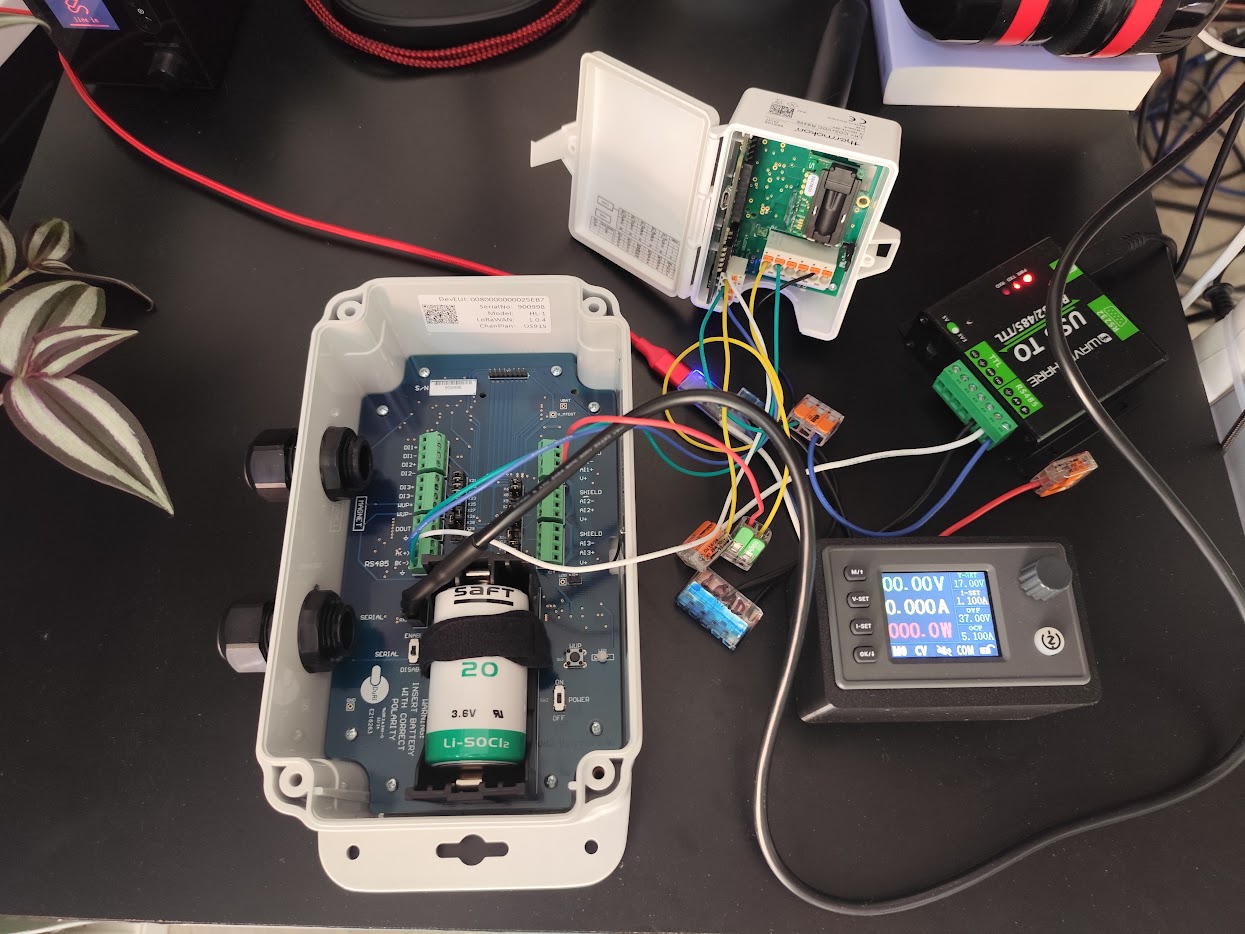
Published battery figures are best case under ideal conditions, and three things move the real number a long way.
Reporting frequency is the obvious one and the headline figure always assumes the infrequent end. An hourly sensor comfortably outlives a per-minute one, and the ratio is not subtle. Signal conditions are the one people miss: a device at the edge of coverage spends far longer transmitting each message than one sitting beside the gateway, sometimes by a factor of six or more, which ties battery life directly to where the units physically end up. And temperature does the rest.
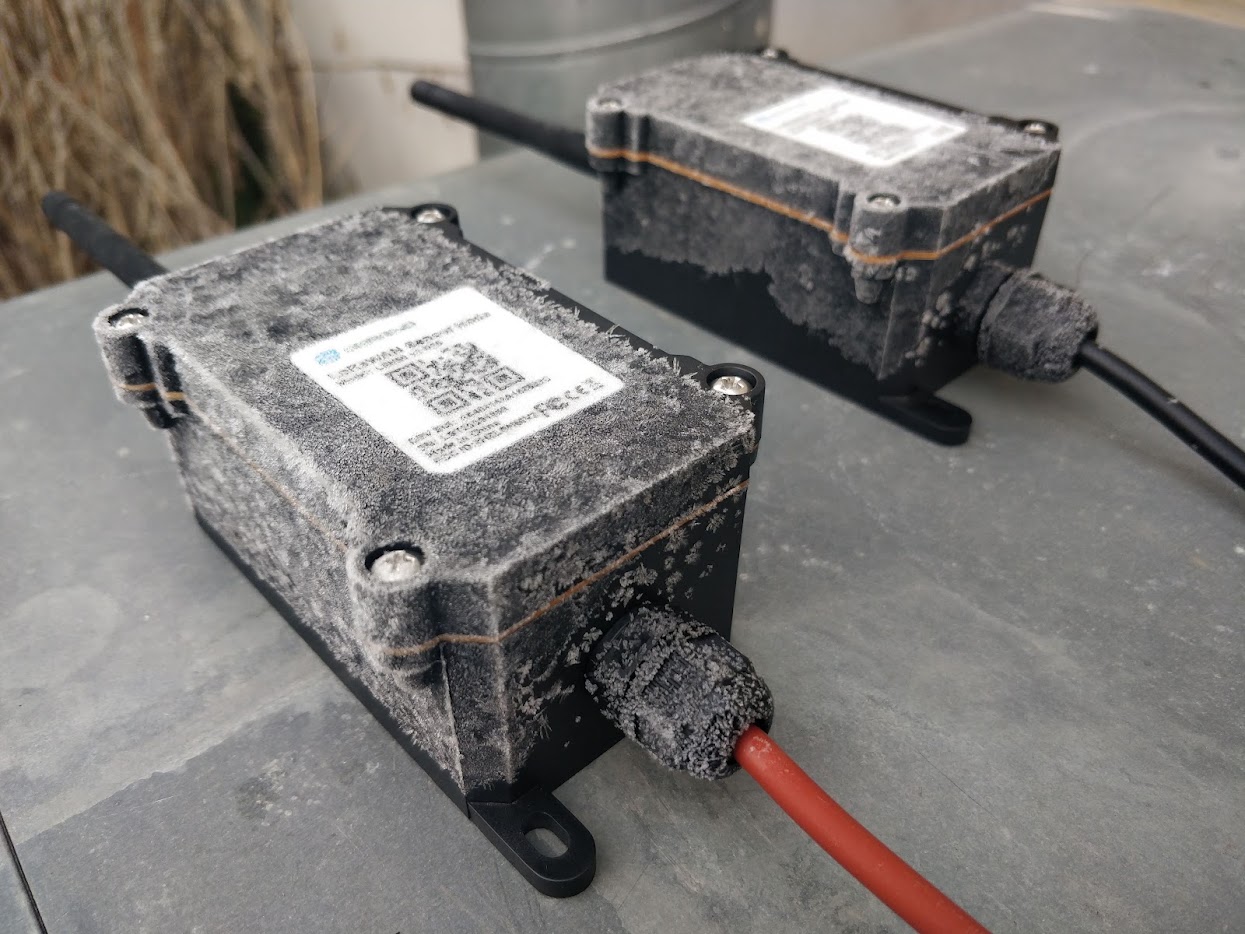
Cold is what actually kills fleets. Lithium chemistries lose capacity below freezing and they differ enormously in how much. A cell rated for years at 25 degrees can shed a third to a half of its usable capacity in a freezer or an unheated northern winter, and the device does not warn you: it simply reports for a while and then does not. Lithium thionyl chloride holds up far better in the cold than a standard lithium-ion cell, so a device specified for the temperature range it will actually see is worth more than one specified for a room.
Then ask the boring question: can the cell be replaced, and by whom. A sealed ten-year device is a ten-year device and then a disposal problem. A replaceable cell is cheaper over the life of the deployment and puts a recurring visit in the operations budget. Neither is wrong; being surprised by which one you bought is.
The Physical Half
Ingress protection is quoted as a number and delivered as a gasket. IP67 on a new unit tells you what the design intends. What matters is whether it is still IP67 after two winters, a hundred thermal cycles and one enthusiastic pressure wash, and the honest way to find out is to ask the vendor how many field returns they have had for water ingress. A vendor who answers has field data. A vendor who is offended does not.
Ultraviolet exposure ages plastics that were never specified for it, and a housing that turns chalky and brittle in three seasons was made from the wrong polymer. Cable glands and connectors are where water actually gets in, more often than the enclosure body. Mounting is where installations get expensive: a device that needs a bespoke bracket costs an hour of labour per unit that nobody put in the estimate, which at three hundred units is a person for two months.
Provisioning, Keys and the Quiet Lock-In
Prefer devices that negotiate their credentials dynamically, through a join handshake or a certificate exchange, over devices shipped with static keys burned in at manufacture. Static credentials are harder to rotate, can be extracted from a captured unit, and on some protocols expose a replay path when a counter resets. That constraint stays with the device for its entire service life.
The question underneath it is who controls the credentials. A sensor that can only be activated through the manufacturer's portal is a sensor whose data path you do not own, and it is a decision made at purchase rather than at deployment. Key custody is covered properly in the security article; at procurement stage it reduces to one requirement, which is that you can provision the device against your own infrastructure without asking anyone.
The same instinct applies to the payload. Every vendor encodes their measurements differently and there is no way around that, but there is a large difference between a documented byte layout with a reference decoder and a binary format you have to reverse engineer from example packets. Ask for the payload documentation before ordering, and if the answer is that their platform handles it, you have learned something important about the platform.
Buy the Supply Chain, Not the Product Page
Plenty of devices are announced, catalogued, reviewed and effectively unavailable. Lead times quoted in months, production allocated to one large customer, a contact form that turns into a four-week email thread.
Ask for current stock and a firm lead time in writing, per regional variant, because units for one region sitting in a warehouse tell you nothing about when the one you need ships. Ask what the second source is if that factory has a bad quarter. And ask how long the product will be manufactured, because a fleet you cannot extend in year three is a fleet you will be replacing wholesale in year four.
Vendor support is worth testing before you need it. Send a genuine technical question through their normal channel and time the response. That number is a better predictor of how the next three years will feel than anything in the brochure.
The Field Trial That Earns Its Keep
None of the above replaces putting devices on the actual site, and a trial designed properly answers most of these questions at once.
Order a handful of candidates rather than one, install them at the worst positions rather than the convenient ones, and leave them alone for at least a month with the reporting interval set to what production will use. Then force the failures: take the network away for a few hours, put a unit in a freezer, close the switchboard door, spray one with a hose. Read the battery telemetry at the start and the end and extrapolate honestly rather than trusting the datasheet.
A trial that surfaces no problems has not tested anything. That is not a disappointing outcome, it is the point: every problem found on ten units is a problem not multiplied by five hundred.
Where This Does Not Apply
If the measurement is genuinely novel, none of this helps, because there is no market to choose from. That is a build rather than a buy, and it is a different article and a different budget. The signal that you are in that situation is usually a requirements list where two entries are individually available and never in the same box.
And if the fleet is small enough, say under thirty units on accessible sites, the arithmetic changes. Being wrong is cheap, the trial costs more than the mistake, and the right move is to buy the well-supported obvious option and move on.
What I Provide
I do the shortlist and the trial. That means reading the actual specifications rather than the marketing pages, asking vendors the questions above and reporting what came back, then running the devices on your site under your conditions with the failures deliberately induced. What you get is a recommendation with the measurements attached, including the units that were rejected and why, which is usually the more useful half.
I have no reseller agreements and take no commission from any manufacturer, which is the only reason a recommendation from me is worth reading. Where nothing on the market fits, I say so and we talk about building it instead.
Does this describe your project?
If any of the above sounds like something you are dealing with, tell me about it. You will get a straight read on the right approach for your situation, and the first conversation costs nothing.
Start a conversationPrefer to see the finished thing first? There is one running on real devices