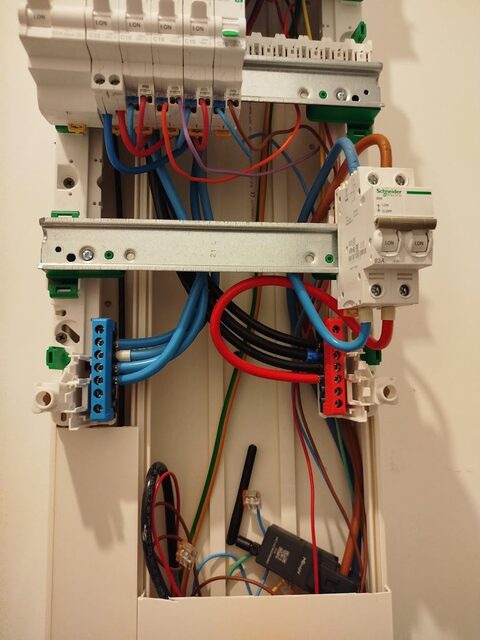
No Power, No Network, Still Reporting
Everything Difficult Is Off the Shelf
A monitoring problem on a site with mains power and an existing network is largely a purchasing exercise. Choose sensors, connect them, done. The interesting part of the work happens on sites that have neither, which is most of the ones worth instrumenting: a pumping station on a hillside, a weather mast in a field, an environmental monitor on a river, a tank on a farm three kilometres from the nearest building.
On those sites the sensor is the smallest part of the design. What determines whether the installation is still reporting in five years is the energy budget, the enclosure and the mounting, in roughly that order, and all three are routinely underspecified because they are less interesting than the measurement.
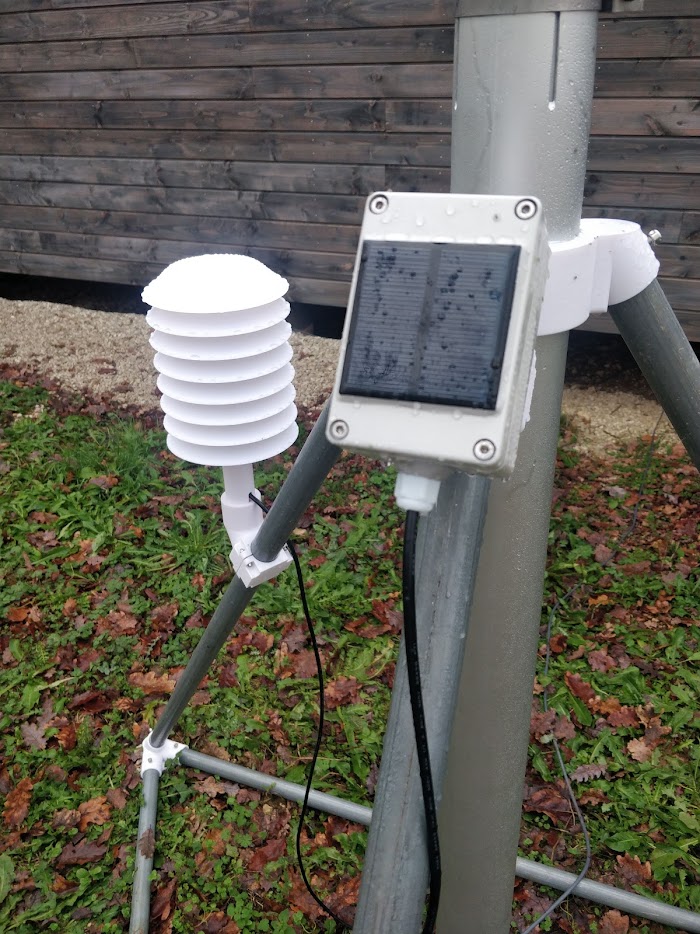
Size for December, Not for the Year
The most common failure on solar installations is not a component fault. It is a panel sized against average conditions, on a site that reports beautifully from March to October and dies in the second week of December every year.
The calculation that matters uses the worst month at your latitude, not the annual mean, and the gap between those two is much larger than people expect. Peak sun hours per day in Northern Europe run around four to five in June and drop below one in December, a factor of five. In the tropics the seasonal swing is smaller but a monsoon delivers a fortnight of heavy overcast that behaves like a northern winter. Either way, the panel that has to keep the system alive is the one working in the worst fortnight of the year.
Then apply the losses honestly, because the panel's rating is a laboratory figure. Charge controller inefficiency, temperature derating, dirt and dust on the glass, and a panel that is not quite at the ideal angle because the mounting was a compromise: collectively these take twenty to thirty percent before anything reaches the battery. A design with no margin on paper has negative margin in the field.
The autonomy requirement is the other half. How many consecutive days of near-zero generation must the system survive on battery alone? Three is a reasonable minimum, five is comfortable, and in a genuinely difficult climate seven is what stops annual site visits. That number multiplies the battery, not the panel, and battery is where the weight and the cost sit.
Tilt is free and it is worth getting right. A panel angled steeply, closer to vertical than the summer optimum, collects more in winter when it matters and sheds snow instead of accumulating it. Optimising for annual total is optimising for the season that was never the problem.
Cold Is What Kills Batteries
Battery chemistry is the decision people spend the least time on and it is the one that determines the replacement schedule.
Lithium iron phosphate has become the sensible default for anything rechargeable at this scale: good cycle life, tolerant of partial charging, and considerably safer than the alternatives when something goes wrong on a remote site. Its limitation is specific and important, which is that charging below freezing damages the cell permanently. A charge controller that does not enforce a low-temperature cutoff will quietly destroy the battery over one winter, and the symptom is a system that seemed fine in autumn and has no capacity by spring.
Primary lithium cells, where the device is small enough not to need recharging, have their own cold story. Lithium thionyl chloride holds capacity far better below freezing than standard lithium chemistries, which is why it appears in devices specified for genuinely cold deployments and why substituting a cheaper cell is a false economy on a site that reaches minus twenty.
Whatever the chemistry, size against capacity at the coldest temperature the site reaches, not at room temperature. A cell that delivers its full rating at twenty degrees and half of it at minus fifteen is behaving normally, and a design that assumed the first figure is a design that fails in the season it was installed to monitor.
Lead acid still has a place where weight does not matter and the temperature range is moderate, mostly because it is cheap and universally available. It is a poor choice anywhere cold and a bad choice anywhere hard to reach, because its life is short enough to guarantee return visits.
Enclosures Fail at the Openings
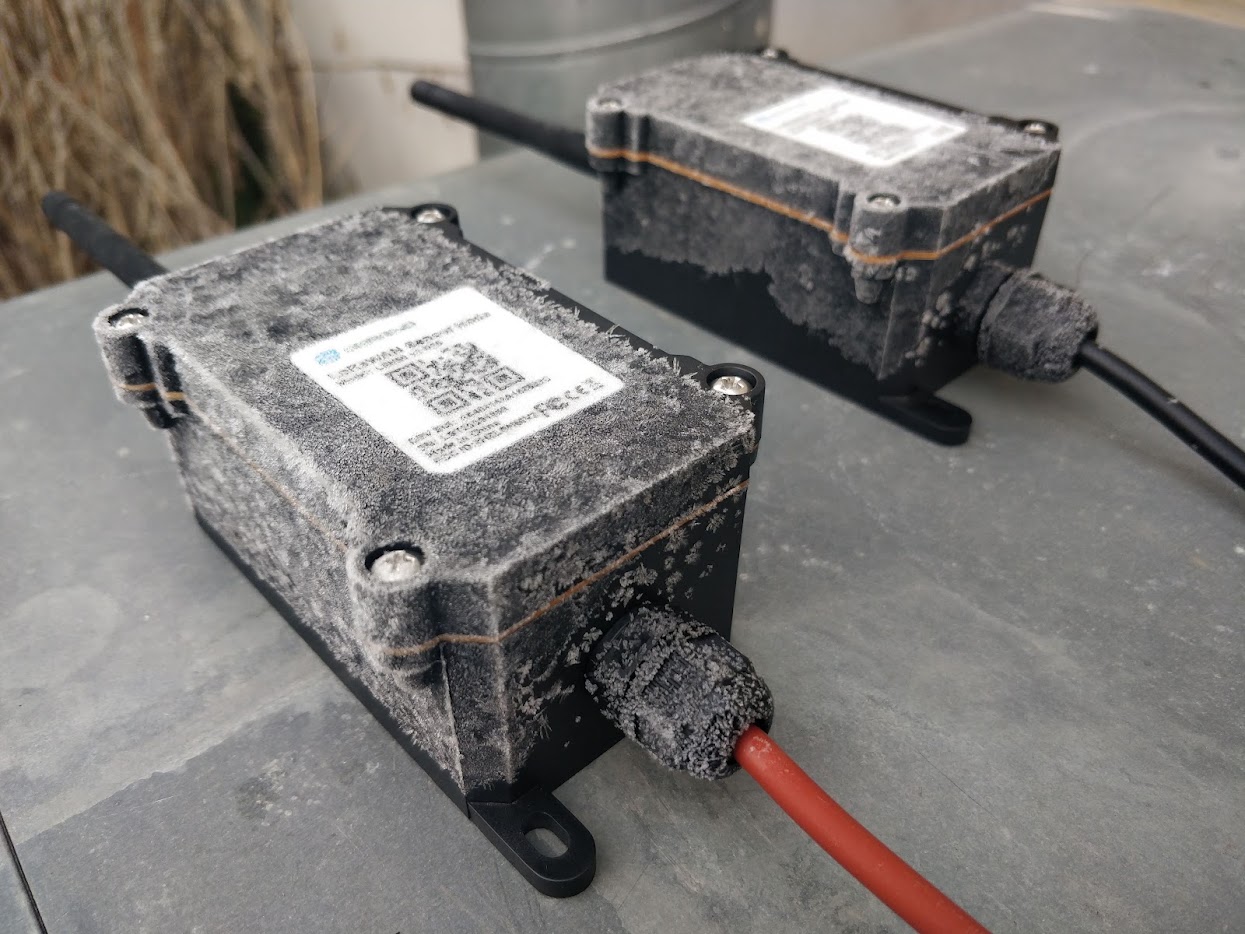
An ingress rating is a statement about a new product in a laboratory. What matters is whether the enclosure is still keeping water out after two winters, a hundred thermal cycles and the day somebody pressure-washed the yard.
Water almost never comes through the box. It comes through the cable glands, which were tightened onto a cable of the wrong diameter, or through an unused gland that nobody blanked, or through a lid gasket compressed unevenly because one screw was over-tightened. Getting these right is unglamorous and it is most of the difference between an installation that survives and one that fills up.
Thermal cycling is the mechanism people miss. A sealed box heats in the sun, the air inside expands and escapes past the seal, then the box cools overnight and draws air back in. That incoming air is at ambient humidity, and its moisture condenses on the coldest surface inside, which is usually the electronics. A box that never let a drop of liquid water in can still be wet inside after a season. Breather vents with a hydrophobic membrane solve this properly by letting pressure equalise without admitting liquid, and they cost very little.
Then there is ultraviolet exposure, which ages any polymer not stabilised for it. An enclosure that turns chalky and brittle in three seasons was made from the wrong material, and it will crack at the mounting points first. Specify UV-stabilised, or accept a repainting schedule.
And heat. A black box in direct sun in a hot climate reaches internal temperatures well above ambient, which shortens battery life dramatically and pushes electronics past their rated range. A light colour and a simple sun shield, an offset plate that shades the enclosure without touching it, is worth more than any specification on the datasheet.
Getting the Data Off the Site
Connectivity on a remote site is a different problem from connectivity in a building, mainly because there is no fallback.
Where several devices sit within a few kilometres of each other, a gateway of your own on the highest available structure is nearly always the cheapest arrangement, because coverage is bought once. Where devices are scattered one to a location, cellular is the answer and the subscription is the price of not building infrastructure at every point. The connectivity article works through where that line falls.
What both share is that the link will be unavailable sometimes, and the design has to assume it rather than hope. A device that transmits and forgets loses everything that happened during an outage, and outages on remote sites are measured in hours or days rather than minutes. Buffering readings locally and sending the backlog when the link returns is a modest amount of firmware and it is the difference between a dataset with holes in it and one without.
Two details make buffering actually work. Every reading must carry the timestamp of when it was taken rather than when it was sent, or the backlog arrives compressed into one instant and the history is nonsense. And the backlog must be paced on transmission, because a device that dumps three days of readings as fast as it can will exhaust its airtime allowance, and on a shared gateway it will do that to its neighbours too.
Mounting Decides the Data
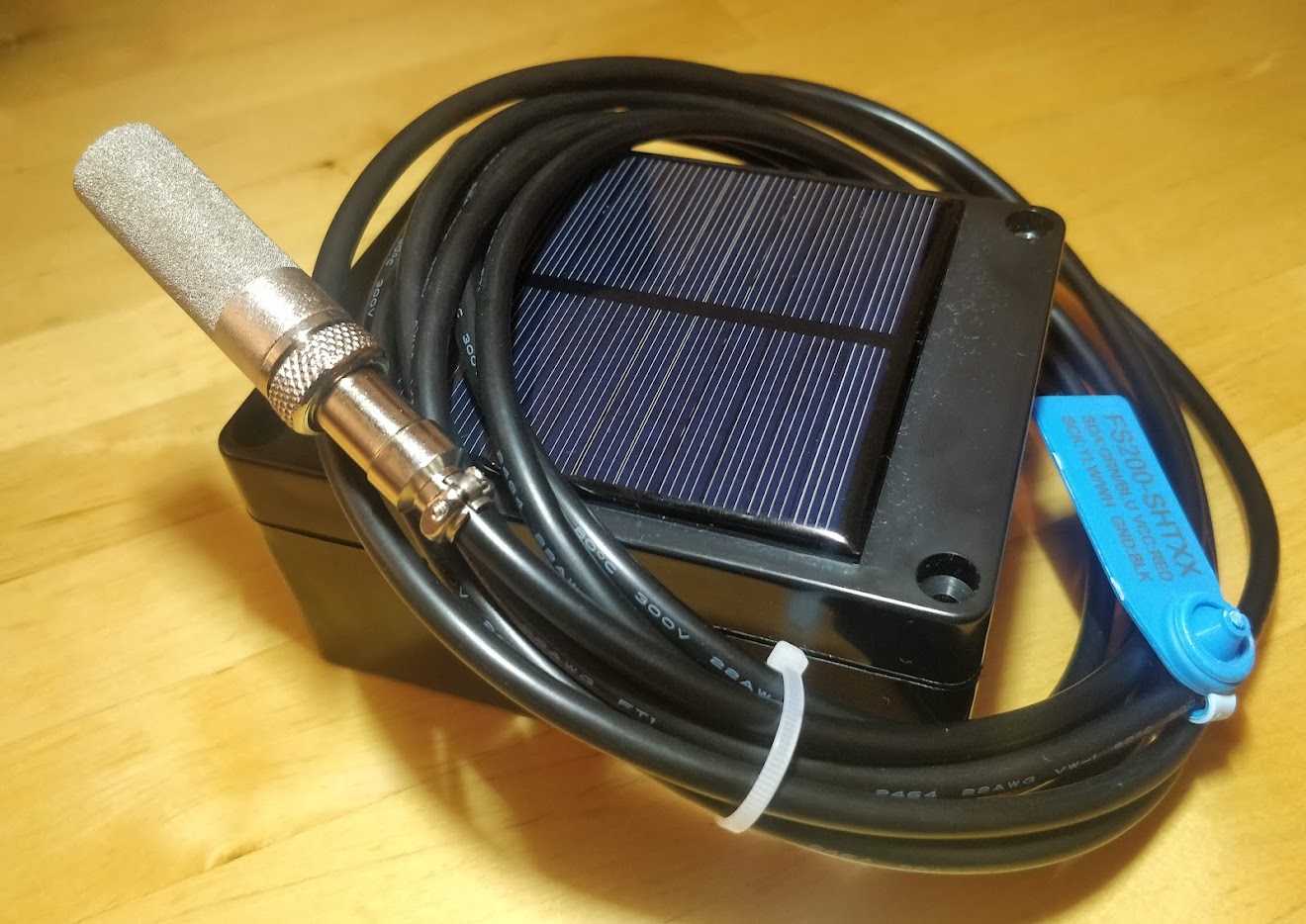
The physical installation is where measurement quality is won or lost, and it is the part that gets delegated to whoever is available on the day.
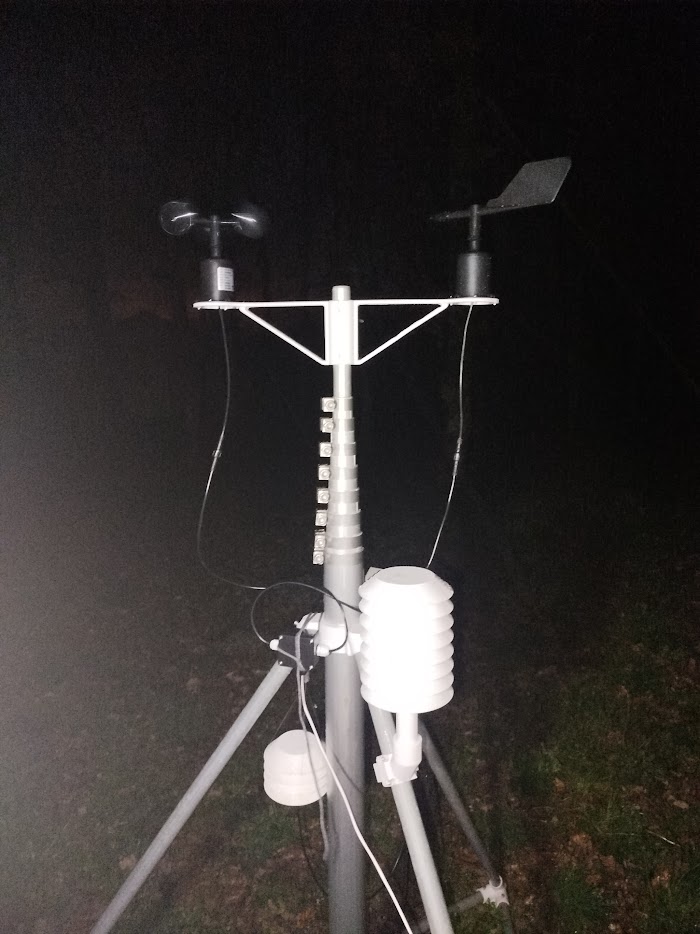
Anything measuring air temperature needs a radiation shield, and it needs to be away from surfaces that radiate heat. A sensor bolted to a south-facing wall is measuring the wall. A sensor in a naturally ventilated shield at the standard height, over a surface representative of the area, is measuring the air. The difference on a sunny afternoon is several degrees, and it is a systematic error that no amount of calibration removes.
Wind measurement is the least forgiving. The convention is ten metres above open ground, and the reason is that obstructions distort flow for a distance of roughly ten times their height downwind. A mast beside a building is not measuring the wind, it is measuring the building, and the resulting record cannot be compared with anything.
Rainfall wants the opposite of shelter but not the exposure of a tall mast, because wind across the gauge mouth carries drops past it and undercatches, often substantially. Level and stable at a modest height, away from anything that could drip into it, is the target.
Where a mast is involved, so is lightning protection and so is guying, and both are engineering rather than opinion. A mast that comes down in a gale takes the sensors with it and produces a site visit nobody budgeted.
On a remote site the recurring cost is the visit, not the hardware. Every design decision should be judged on whether it makes a visit less likely, because that is the only number that compounds.
What Actually Goes Wrong
After enough of these, the failure list is short and repetitive.
The panel that stopped generating because it faced a hedge that grew, or because bird droppings were never cleaned, or because a winter's dust was never rinsed off. Sites need looking at once a year even when the data looks fine.
The battery that was replaced with a physically identical cell of a different chemistry by somebody helpful, and then charged outside its safe temperature range.
The gland that was never tightened, on the one cable that was fitted last when it was getting dark.
The device that reported perfectly for eleven months and then went quiet, which turns out to be a firmware fault with no watchdog to recover from it. This is the one that argues hardest for the firmware quality checks in the procurement article, because on a remote site a lockup is a truck roll.
And the reading that was subtly wrong from the first day because of where it was mounted, which nobody caught because it looked plausible. That is the most expensive of the five, because the data was used.
Where a Different Approach Is Better
If the site has any mains power at all, even intermittent, use it and keep the battery as a backup rather than as the supply. Half the difficulty above evaporates and the system becomes capable of far more.
If a person visits the site regularly for other reasons, a data logger downloaded on those visits is sometimes the honest answer. It is cheaper, more robust, and delivers the same dataset with a delay. The case for telemetry is when the delay matters, when the visit would otherwise not happen, or when an alert needs to arrive in minutes.
And if the measurement requires a camera or high-rate sampling, the energy budget changes by an order of magnitude and this becomes a different design with a different panel and a different conversation about cost.
What I Provide
I do the energy budget properly, which means sizing panel and battery against the worst month at the actual latitude with the losses and the autonomy requirement written down, rather than taking a supplier's kit and hoping. Where the numbers do not work, I say so before anything is bought.
Then the physical build: enclosure specification with the breather and the gland schedule, mounting and shielding that gives the measurement a chance, lightning protection where a mast calls for it, and the buffering firmware that means an outage costs nothing. Custom hardware where nothing on the market fits, schematic through to firmware, with every file handed over.
I have run these in enough climates to know which shortcuts survive and which come back as a site visit in February. The documentation that comes with the system includes why each decision went the way it did, because the person maintaining it in year four will otherwise undo them.
Does this describe your project?
If any of the above sounds like something you are dealing with, tell me about it. You will get a straight read on the right approach for your situation, and the first conversation costs nothing.
Start a conversationPrefer to see the finished thing first? There is one running on real devices