Metering Energy Where the Load Actually Sits
One Number for the Whole Building
The utility meter at the entry point is accurate, certified and almost useless for management. It tells you what the site consumed and nothing about which unit, which process or which piece of equipment consumed it, which means every conversation about reducing consumption starts from a guess.
Sub-metering replaces the guess. Break the total out by tenant, by circuit, by machine or by phase, and two things become possible that were not: you can bill or allocate accurately, and you can see the shape of the load rather than its total. In my experience the second is worth more, because a load profile frequently changes a capacity decision, and capacity decisions have a digit more in them than energy bills do.
Clamp On or Wire In
There are two ways to measure a circuit and the choice is mostly about whether you can take the supply down.
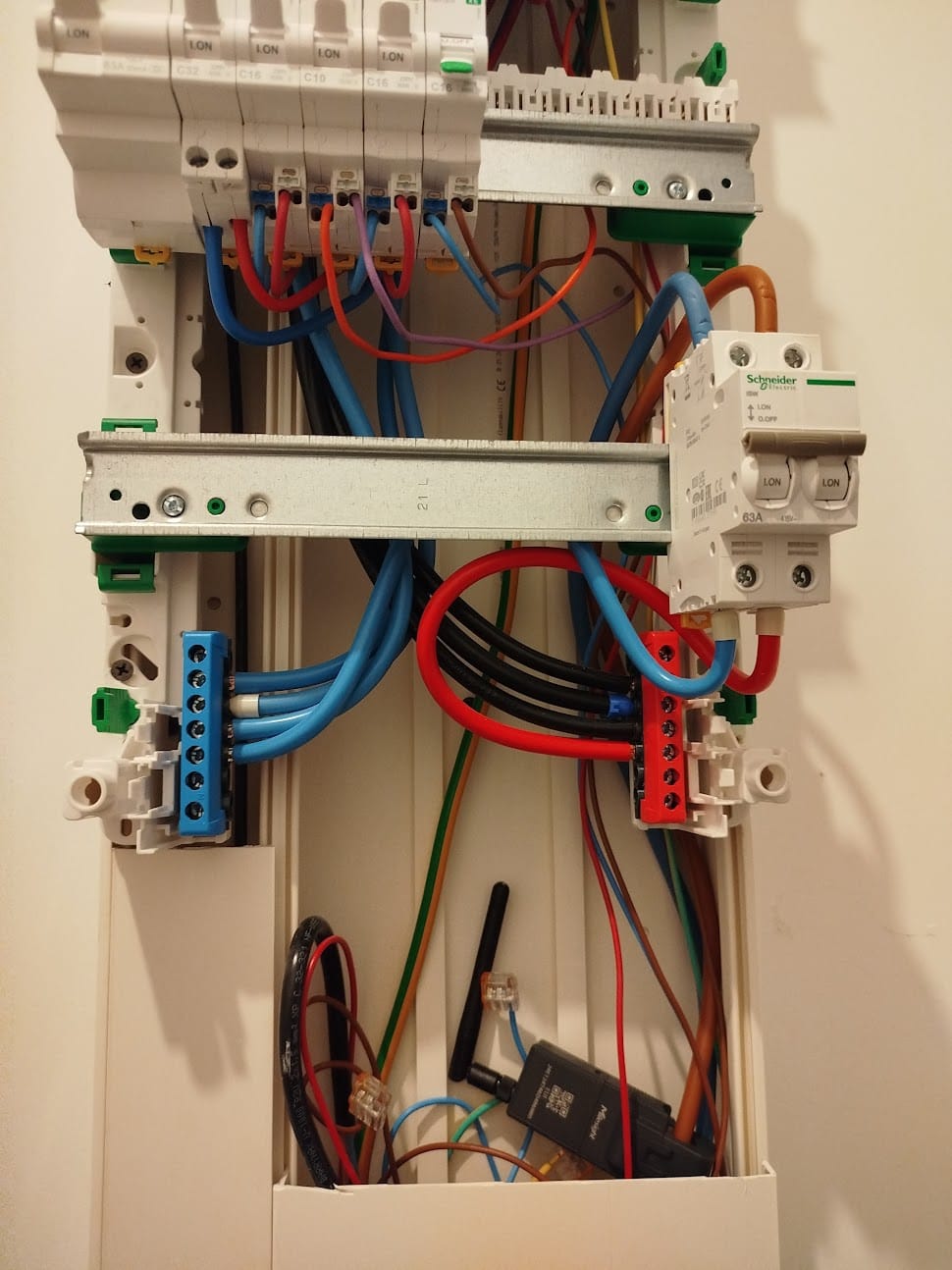
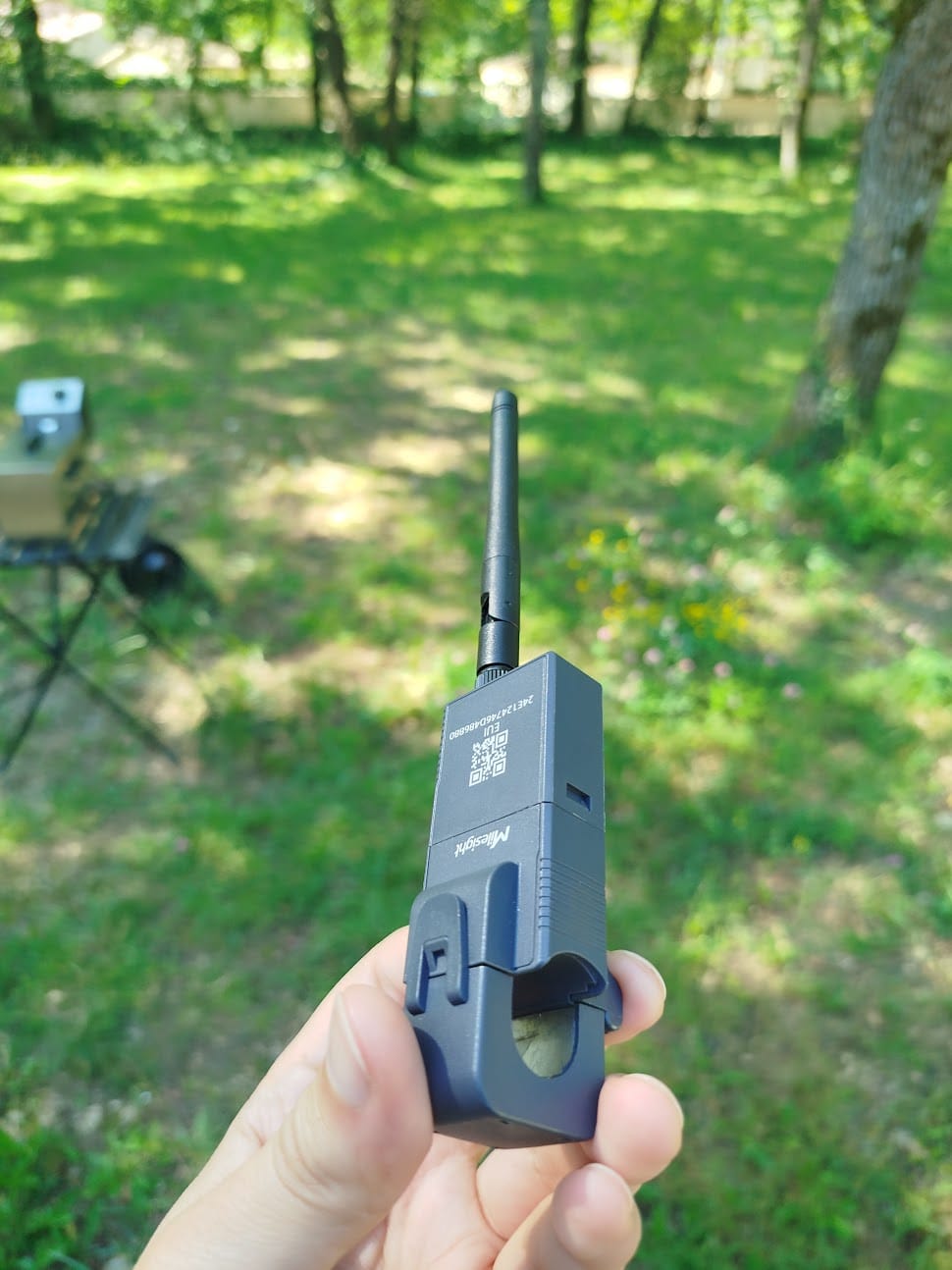
A current transformer, the split-core clamp that opens and closes around a live conductor, measures the magnetic field the current produces. Nothing is cut, nothing is disconnected, and on an accessible board it goes on in well under half an hour per circuit. That is what makes retrofitting a whole building feasible, because the alternative is a shutdown per unit and a negotiation with each occupant.
The cost of that convenience is that a clamp measures current and infers power. To compute real power in watts, the device also needs voltage and the phase relationship between them, and cheaper clamp-only devices simply assume both. That assumption is fine for a resistive load and increasingly wrong as the load becomes motors, drives, LED lighting and switch-mode supplies, all of which draw current out of phase with voltage. A clamp device that also measures voltage, which means a connection into the board rather than just around a cable, is substantially more accurate on real loads and is what I specify for anything feeding a bill.
A DIN rail meter wires into the board in series and measures voltage and current directly, so it computes true power rather than inferring it. It reads more accurately, exposes power factor and harmonic distortion, and comes in revenue-grade variants where the reading has to stand up legally. It also requires a de-energised board, a qualified electrician and a planned outage, which makes it excellent for new construction and panel upgrades and a poor fit for a retrofit in an occupied building.
For monitoring one appliance without touching a board at all, a metering plug between the socket and the equipment is the simplest thing that works. It handles ordinary plug loads rather than hardwired or high-power equipment, and it earns its place in an energy audit or on a single suspicious machine.
How Accurate Is Accurate Enough
This question decides the budget and it is usually answered by reflex rather than by requirement.
For finding waste, a few percent is plenty. You are looking for a circuit drawing four hundred watts overnight when it should draw nothing, and no reasonable measurement error hides that. Specifying revenue-grade hardware to answer this question is spending several times more for precision that changes no decision.
For internal allocation, where a service charge is split between tenants on measured share rather than floor area, one to two percent is the right target and most voltage-sensing clamp devices reach it. What matters more than the headline accuracy is consistency: if every unit is measured the same way with the same class of device, a small systematic error affects everyone's share equally and the split stays fair.
For a bill that a tenant could dispute in front of a regulator, the requirement is not accuracy, it is approval. The instrument itself has to be a legally approved meter under the local metrology rules, and no amount of precision from an unapproved device satisfies that. This is the point where the retrofit approach stops and a certified meter goes in, and getting it wrong is expensive to discover. If billing is in scope, establish the local requirement before specifying anything.
Accuracy is not a virtue in itself, it is a requirement with a price. Decide what the number will be used for, then buy the cheapest thing that supports that use honestly.
The Load Profile Is the Real Product
The measurement everyone asks for is kilowatt hours, because that is what appears on a bill. The measurement that changes decisions is instantaneous power over time.
A load profile shows the peaks, and peaks are what capacity is sized for. I have seen a supply upgrade quoted at a substantial five-figure sum abandoned after a month of metering showed the peak was a single compressor starting simultaneously with a heating circuit, and staggering them by four minutes kept the site inside its existing capacity. The metering paid for itself several times over in one decision, and the energy saving was incidental.
The same data answers the tariff question. Where pricing varies by time of day or carries a demand charge on the peak, knowing when consumption happens rather than how much is what makes a tariff negotiable, and it makes load shifting something you can quantify rather than hope for.
And it settles arguments. A tenant convinced their share is unfair, or a manager convinced a machine is faulty, is a conversation that goes nowhere without data and takes ten minutes with it.
Solar and the Direction of Flow
Self-consumption changes what has to be measured, because power now flows both ways and the interesting quantities are all derived.
Generation alone is not useful. What matters is how much of what you generated you consumed on site, because that is the portion displacing purchased energy at retail price, against the portion exported at whatever the local arrangement pays, which is typically much less. Optimising self-consumption is the whole game in most jurisdictions, and it is invisible without metering both the generation and the site load on the same time base.
That requires bidirectional measurement at the connection point and a device that reports signed values, which not all of them do. A clamp that reports magnitude only will tell you a hundred amps is flowing and not which way, and the resulting data is unusable for this purpose. It is worth checking on the datasheet rather than after installation.
Once both are measured on the same clock, the analysis is straightforward and often surprising: the hours where generation is wasted because nothing is running, the loads that could move into the middle of the day, and the honest payback on a battery, which is a calculation nobody should do from an annual total.
Where Installations Go Wrong
Four failures account for most of the disappointing ones.
The clamp on the wrong conductor is the most common and the hardest to spot later, because the data looks entirely plausible. A clamp around a neutral instead of a line, or around the wrong one of four similar cables in a crowded board, produces a well-behaved graph of the wrong circuit. The only reliable defence is verification at install: switch a known load and confirm the reading moves.
Direction reversed is the second. Most current transformers have an arrow indicating the direction of flow, and a reversed clamp reads negative power, which some devices report as zero and others as a large positive number. Again, verify against a known load rather than trusting the arrow was noticed.
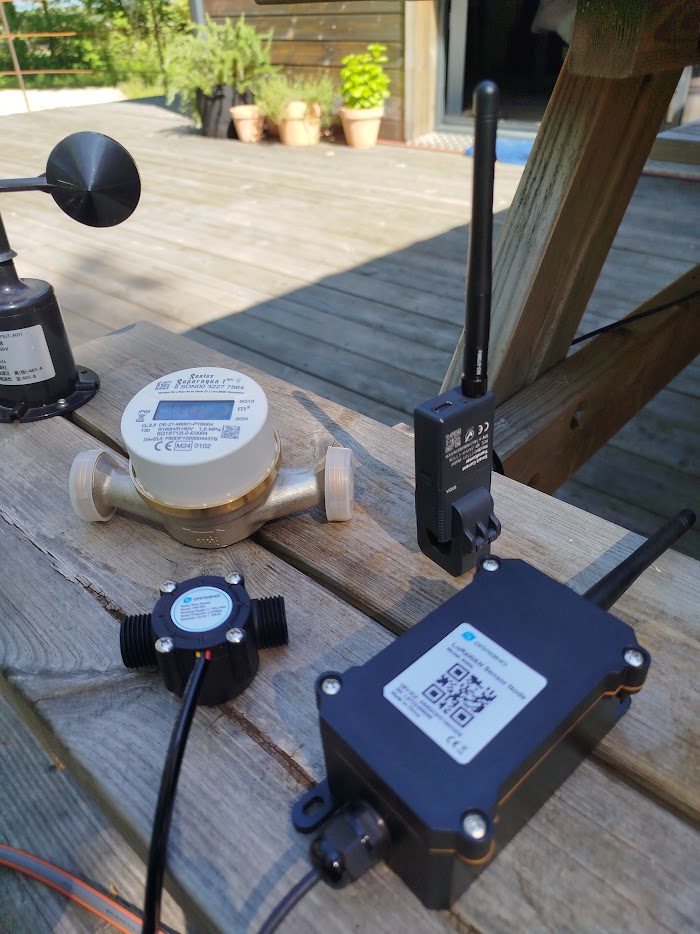
Radio out of a steel enclosure is the third and it is a physics problem rather than a mistake. A closed switchboard door can cost twenty decibels or more, which is the difference between a reliable link and an intermittent one. Test with the door shut before signing off, and expect to need an antenna outside the enclosure or a gateway close to the panels.
The fourth is undersized measurement range. A clamp rated for a hundred amps on a circuit that peaks at two hundred does not report two hundred, it saturates and reports something lower, quietly, exactly during the peak you installed it to find. Size against the breaker rating rather than the expected load.
What This Cannot Tell You
Sub-metering measures circuits, not equipment, and the distinction matters when the results are presented.
A circuit feeding six machines gives you the six together. Breaking them apart means either a clamp per machine, which means access to each one, or inference from the load pattern, which is a guess wearing statistics. Both are legitimate, and only one should be described as a measurement.
It also says nothing about why. A circuit consuming forty percent more than its peers is a fact; whether that is a fault, a duty cycle difference, a different tenant's working hours or a compressor with a failing valve requires somebody to go and look. Metering shortens the list of places to look, which is a large service, and it does not replace the looking.
And below a certain scale it does not pay. Instrumenting a small site with a handful of circuits to find waste that amounts to a modest annual sum is a project that will not return its own cost, and the honest recommendation there is a clamp meter, an afternoon and a spreadsheet.
What I Provide
I specify and install the metering, which mostly means deciding per circuit whether a clamp is adequate or a wired meter is required, and being clear about which readings could support a bill and which could not. The verification at install is part of the work rather than an optional extra, because a fleet of correctly installed sensors on incorrectly identified circuits is worse than no data.
Behind it goes the pipeline: storage that answers a year-long query without complaint, dashboards built for whoever actually reads them, and allocation or billing output in whatever format your finance system ingests. There is a live dashboard on this site with real meters reporting to it, instantaneous watts beside the cumulative counter, which is the pairing every allocation model rests on.
Source code, documentation and the circuit schedule come with it, and the circuit schedule is the part people underestimate: knowing which sensor is on which breaker, verified rather than assumed, is what makes the data defensible three years later.
Does this describe your project?
If any of the above sounds like something you are dealing with, tell me about it. You will get a straight read on the right approach for your situation, and the first conversation costs nothing.
Start a conversationPrefer to see the finished thing first? There is one running on real devices